
Patients treated with KYGEVVI were compared to an external control group of untreated patients.1,2

The survival analysis included 78 patients treated with KYGEVVI with a median age of TK2d symptom onset at 1.5 years (range: 0.01-12 years).1
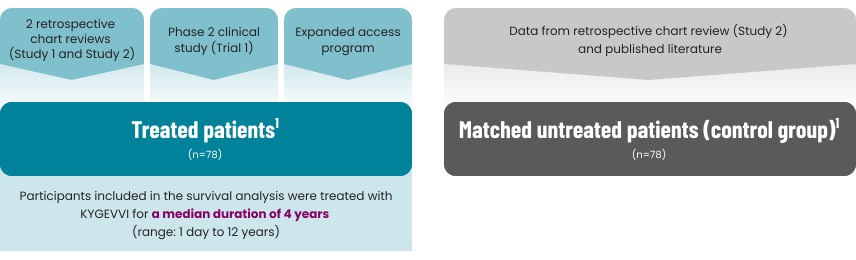
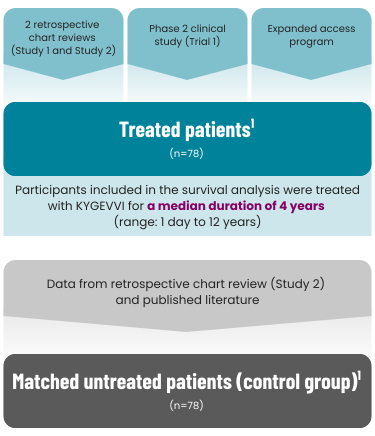
- The efficacy of KYGEVVI for the treatment of patients with TK2d, with an age of symptom onset ≤12 years of age, was established based on data from:1
- One Phase 2, prospective, open-label, single-arm study (Trial 1)1
- Two retrospective chart review studies (Study 1, Study 2)1
- Expanded access program1
- The survival in treated patients was compared with survival in an untreated external control group comprised of untreated patients from published literature and Study 21
- The untreated patients were matched to the treated patients using age of TK2d symptom onset (≤2 years or >2 years to ≤12 years)1
- A total of 78 matched pairs were identified1
Baseline characteristics of treated patients with TK2d onset at ≤12 years old1
Study Population | KYGEVVI (n=78) |
|---|---|
Male, % (n) | 54% (42) |
Median treatment duration, years | 4 (range: 1 day to 12 years) |
Median dose, mg/kg/day | 762 (range: 260 to 800 mg/kg/day) |

EARLY-ONSET TK2d IS A LIFE-THREATENING DISEASE.3
Overall survival time with KYGEVVI was studied.1
References
- KYGEVVI (doxecitine and doxribtimine) U.S. Prescribing Information. Smyrna, GA: UCB, Inc.
- Hirano M, Garone C, Haas R, et al. Survival analyses in patients with thymidine kinase 2 deficiency aged ≤12 years at symptom onset who received pyrimidine nucleos(t)ide therapy. Poster presented at: MDA Clinical and Scientific Conference; March 16-19, 2025; Dallas, TX, virtual.
- Garone C, Taylor RW, Nascimento A, et al. Retrospective natural history of thymidine kinase 2 deficiency. J Med Genet. 2018;55(8):515-521. doi:10.1136/jmedgenet-2017-105012
